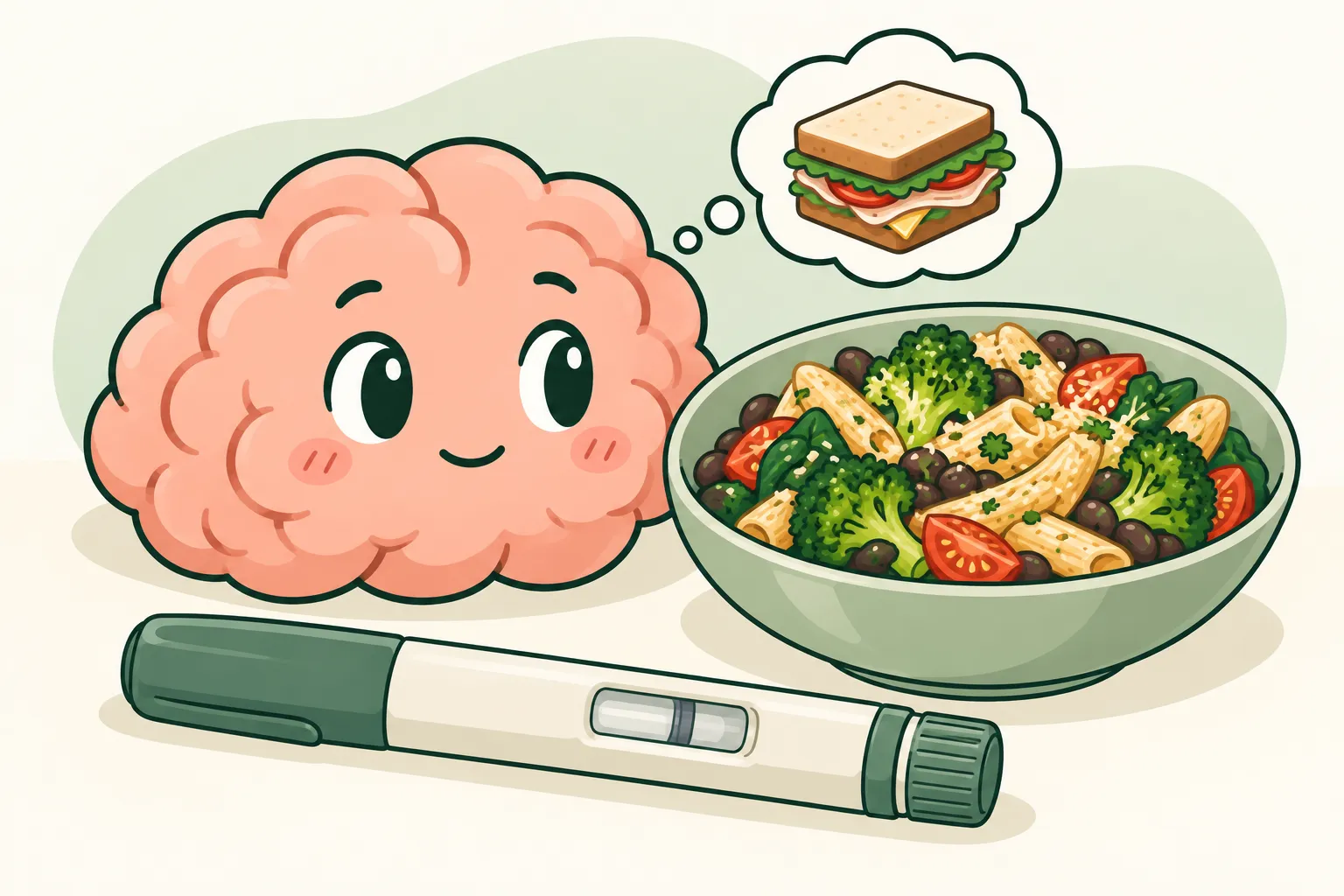
Someone else's experience can help you identify a question you had not thought to ask. It cannot tell you in advance how your own treatment would feel or what result it would produce.
By Aiko Matsuda
A celebrity says she tried a weight-loss medication. Two photographs appear beside the headline. It can feel as though the whole story is right there.
But the photographs leave out the parts that often matter most: when treatment started, how it felt, what else changed, and what happened later.
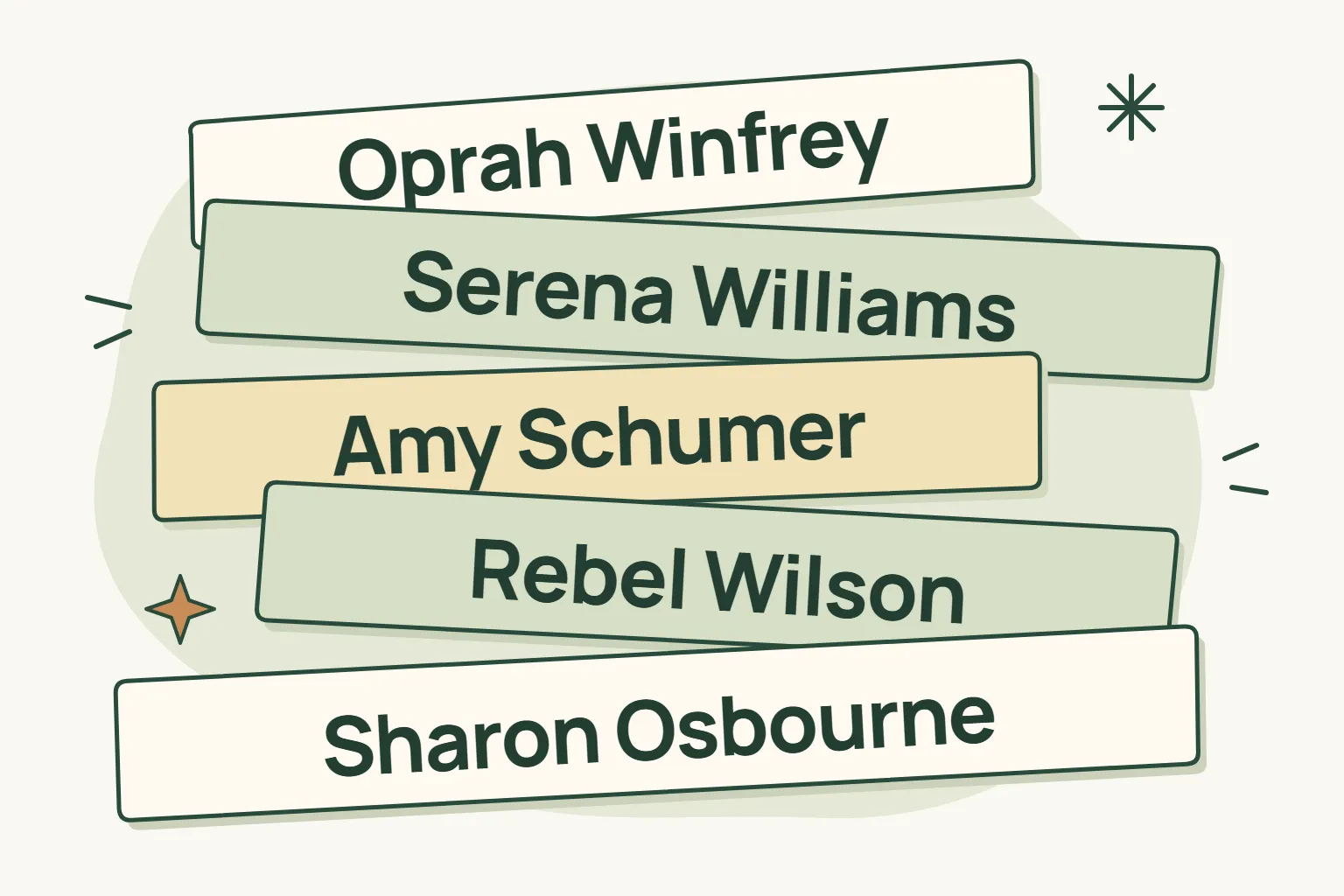
Oprah Winfrey, Serena Williams, Amy Schumer, Rebel Wilson and Sharon Osbourne have each spoken publicly about using these medicines. Their accounts cover quite different experiences, from seeking extra support to managing side effects and reconsidering long-term treatment.
Looking at what each person actually said gives us something more useful than another set of bodies to compare with our own. These are dated accounts of their experiences, rather than a claim about what anyone takes today.
Oprah Winfrey and the year without medication
In a December 2025 PEOPLE interview, Oprah described stopping her GLP-1 medication in January 2024, on her 70th birthday. She continued her eating and exercise routine but reported regaining 20 pounds, about 9 kilograms, over the following year.
“I tried to beat the medication,” she said. The experience led her to expect that treatment would be a long-term part of her life. She did not name the medicine she used.1
That raises a practical question: what is the plan for maintaining weight loss if treatment ends? It deserves attention before someone reaches a target weight, while there is time to discuss the options.
Research helps explain why. In the STEP 4 trial, adults with overweight or obesity who completed an initial period on semaglutide were assigned either to continue treatment or switch to placebo. Both groups continued lifestyle support. Over the next 48 weeks, the group switched to placebo regained weight on average, while the group continuing semaglutide lost more.2
That finding supports planning for maintenance. It does not establish that everyone will regain the same amount or need the same treatment indefinitely. The study also involved people who had already reached and tolerated its treatment dose.
Oprah’s account makes the maintenance question personal. The trial gives us evidence beyond one person’s experience.
Serena Williams and seeking support despite years of training
Serena’s public account began from a different question: what happens when someone accustomed to training hard still wants help with weight management?
In Ro’s announcement on 21 August 2025, she described struggling to reach her weight goals after having children, despite her training and eating habits. She said she sought GLP-1 treatment and clinical support through the company.3
The context belongs beside the story. The announcement introduced Serena as a celebrity patient ambassador for Ro, and disclosed that her husband, Alexis Ohanian, was an investor and board member. This was part of a commercial partnership.3
A partnership does not make someone’s experience meaningless. It does mean the account is being shared in a setting designed to promote a service, which is worth knowing when you read it.
The useful question her story opens up is whether a person’s existing effort is being understood properly. An athletic reputation gives us very little information about that person’s medical needs. It also cannot tell us which treatment would suit someone reading about them.
Amy Schumer and two different medication experiences
In an Instagram video posted on 21 March 2025, reported by Us Weekly, Amy described vomiting during an earlier experience with Wegovy. She then described her experience with Mounjaro as “really good.”4
There was more happening in the same account. She said she had also been prescribed estrogen and progesterone for perimenopause through Midi Health, and disclosed that she had invested in the company.4
That detail changes how the story should be read. Her comments about feeling better came alongside several treatments. They cannot establish which treatment caused each improvement, or show that Mounjaro is universally easier to tolerate than Wegovy.
What the account does offer is a wider way to think about the phrase “it worked.” A change on the scale and a tolerable experience are separate things to discuss. Someone can care about both.
When talking with a prescriber, describing what happens during an ordinary day can be more useful than simply saying a medicine is good or bad: what symptoms occur, how eating feels, and whether treatment is interfering with daily life.5
Rebel Wilson and the importance of getting the order right
Rebel’s main period of weight loss began with changes to food and activity during her 2020 “year of health.” In a March 2024 Sunday Times interview, reported by PEOPLE, she described briefly using Ozempic later for maintenance. She said she was no longer taking it at the time.6
The order is the point. Learning that someone used medication at one stage does not explain every earlier change in their weight.
Imagine an article placing a photograph from years ago beside a recent one, with a drug’s name between them. Even if both photographs are genuine, that layout encourages a conclusion about everything that happened in the interval. The dates may tell a different story.
Before drawing a conclusion from any such comparison, ask when the medicine entered the picture. A photograph records an appearance on a particular day. It does not provide a treatment history.
Sharon Osbourne and an outcome she did not want
In a September 2023 appearance on Piers Morgan Uncensored, reported by Vanity Fair, Sharon said she had stopped Ozempic after losing more weight than she wanted. She also described nausea during treatment.7
The important part of that account is her own assessment of the experience. There is no need to judge her appearance to take an unwanted outcome seriously.
Her story also brings a question into focus that can disappear from dramatic weight-loss coverage: how are benefits and difficulties being weighed against each other?
Health, side effects and the person’s circumstances belong in that assessment. NIDDK’s guidance describes medication choice as a decision made with a healthcare professional, taking those factors into account.5
A striking photograph cannot do that work. Neither can the assumption that a larger weight change must always be a better result.
What celebrity GLP-1 stories can actually tell us
These accounts are useful because they make different questions visible. They are much less useful when they are treated as a competition, with the most dramatic photograph deciding who succeeded.
When you encounter another celebrity weight-loss headline, start with the person’s own words and the date. Then look for the sequence of events. Did medication come before the main change, afterwards, or during a period when several things changed together?
Notice the setting, too. An interview, a personal update and a paid campaign can all contain real experiences, but they give you different reasons to examine what has been included and what remains unknown.
Most importantly, keep the account separate from the prediction. Someone else’s experience can help you identify a question you had not thought to ask. It cannot tell you in advance how your own treatment would feel or what result it would produce.
Bring the useful question into your own conversation
If you are considering medication or already taking it, the most useful response to these stories is to identify what you want to understand about your own care.
That could be how benefits will be assessed, which side effects need attention, or what the longer-term plan would be if treatment became difficult to tolerate or afford. Bring those questions to your prescriber, including any decision about starting, stopping or changing treatment.5
You can want help with weight management and still ask careful questions about that help. You can also listen to someone else’s experience without making their body, their medicine or their outcome your benchmark.
For the explanation behind the headlines, read How GLP-1s Actually Work: Hunger, Blood Sugar, and Weight Loss. It explains how these medicines affect appetite and why feeling sick is not the goal.
Sources
Footnotes
-
Eileen Finan, PEOPLE. Oprah on her year without GLP-1 treatment. Published 30 December 2025; updated 31 December 2025. ↩
-
Rubino D, et al. The STEP 4 randomized clinical trial. JAMA. 2021;325(14):1414–1425. doi:10.1001/jama.2021.3224. ↩
-
Ro. Serena Williams partnership announcement. 21 August 2025. Company press release, including its commercial disclosure. ↩ ↩2
-
Emily Zogbi, Us Weekly. Amy Schumer on Wegovy, Mounjaro and hormone treatment. 22 March 2025, reporting her Instagram video of 21 March. ↩ ↩2
-
National Institute of Diabetes and Digestive and Kidney Diseases. Prescription Medications to Treat Overweight & Obesity. Reviewed June 2024. Used for general treatment discussions, not product-specific prescribing instructions. ↩ ↩2 ↩3
-
Brenton Blanchet, PEOPLE. Rebel Wilson on her experience with Ozempic. 31 March 2024, reporting her Sunday Times interview. ↩
-
Kase Wickman, Vanity Fair. Sharon Osbourne’s account of stopping Ozempic. 22 September 2023, reporting her Piers Morgan Uncensored appearance. ↩